From Ethical Data to Ethical AI
On data ownership, human agency, and the systems we build around intelligence.
By Angela Benton
I've spent much of my career thinking about who benefits from technology, who gets left out, and what happens when the systems we create begin to shape the world around us.
In fact long before ethical AI became a mainstream conversation, I was exploring many of the same questions through data. Who owns it? Who profits from it? Who decides how it's used? And what happens when the people generating that value have little say in any of those decisions?
These questions eventually became the foundation of Streamlytics, the data company I founded in 2018. Today, they continue to inform my work in artificial intelligence, human judgment, and the systems we're building for an autonomous world. While the technology has changed considerably many of the underlying questions haven't.
Before Ethical AI, There Was Ethical Data
When I started Streamlytics, much of the digital economy operated on a simple premise: people generated data, companies collected it, and the resulting value largely flowed in one direction. I wanted to challenge that model.
Through Streamlytics, we built technology that gave people greater access to their own data and the ability to license it on their terms. We developed products like GetMyData and Clture, alongside infrastructure for standardizing data from different sources so it could be made useful to businesses and other organizations.
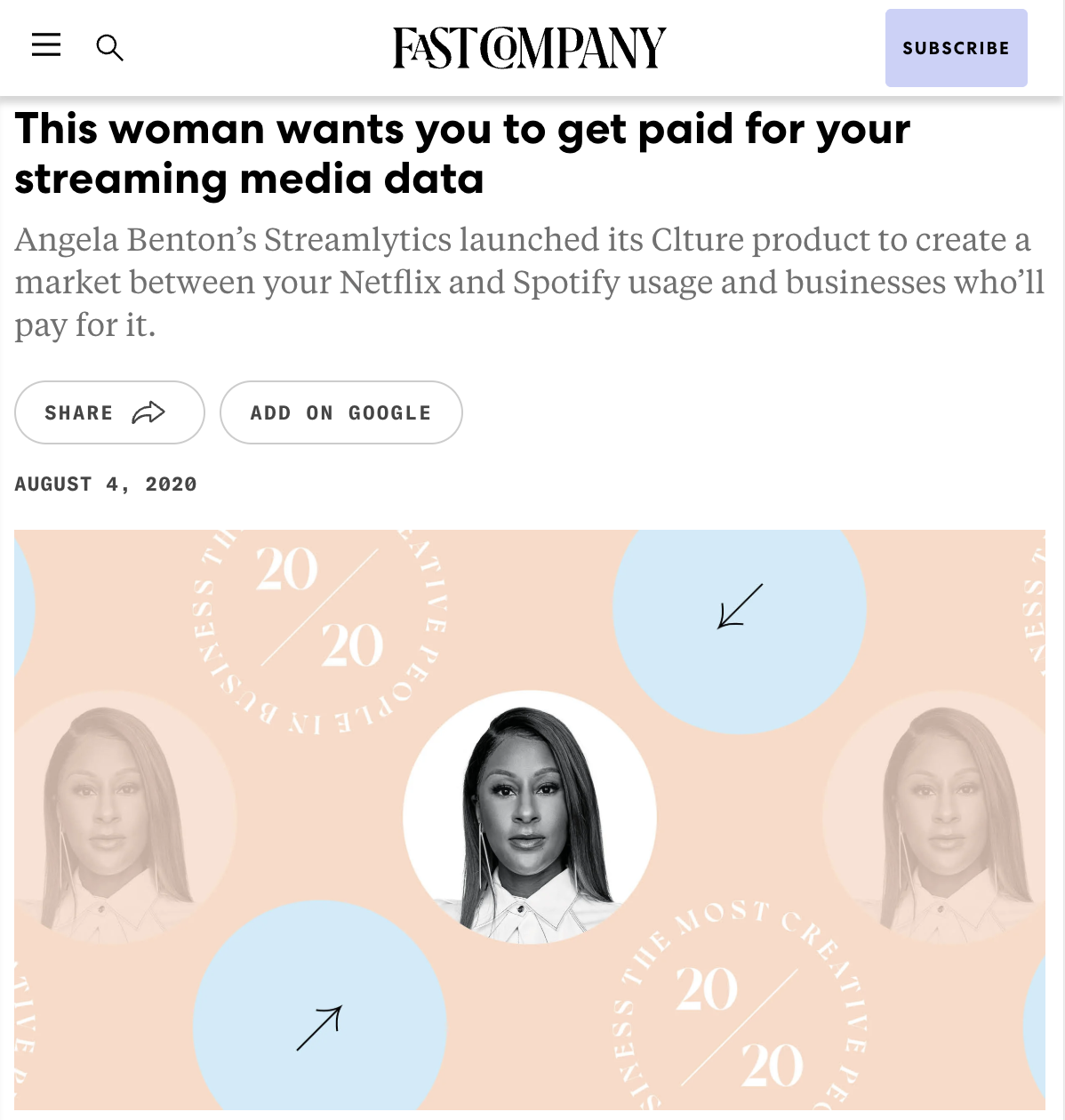
Over time, Streamlytics processed more than 10 billion data points from consumers across more than 125 countries. But scale wasn't the most interesting part of what we were building. What interested me most was whether a different economic relationship could exist between the people generating data and the companies benefiting from it.
Could people retain ownership? Could participation be consensual? Could they share in the value their data created? And could companies build better technology using data obtained through more transparent and equitable systems?
For me, ethical data wasn't simply about protecting information. It was about changing the underlying relationship between people, technology, and value.
The Connection to Artificial Intelligence
By 2019, I was already concerned about what would happen as artificial intelligence became more deeply embedded in everyday life.
In my WIRED essay, An AI-Run World Needs to Better Reflect People of Color, I examined how incomplete and unrepresentative training data could reproduce existing inequalities through automated systems.
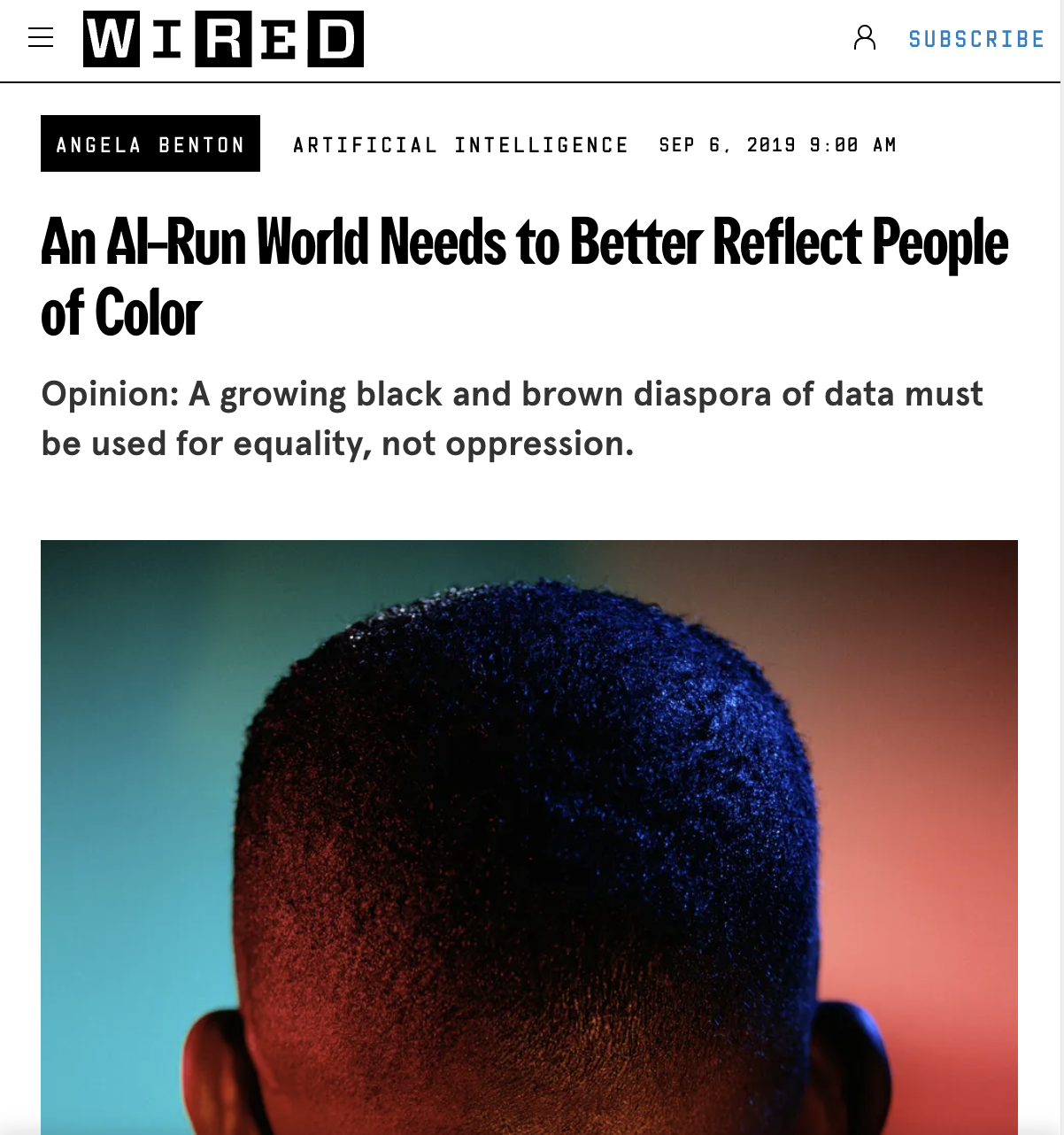
The concern extended beyond whether algorithms worked correctly. It was about whose experiences informed those algorithms in the first place, and who would be affected when they didn't.
This thinking was central to Streamlytics.
We saw an opportunity to develop more representative, ethically sourced data while giving individuals greater control over how their information was used. That work eventually became part of a larger conversation about AI training, algorithmic bias, data licensing, and the economics of artificial intelligence.
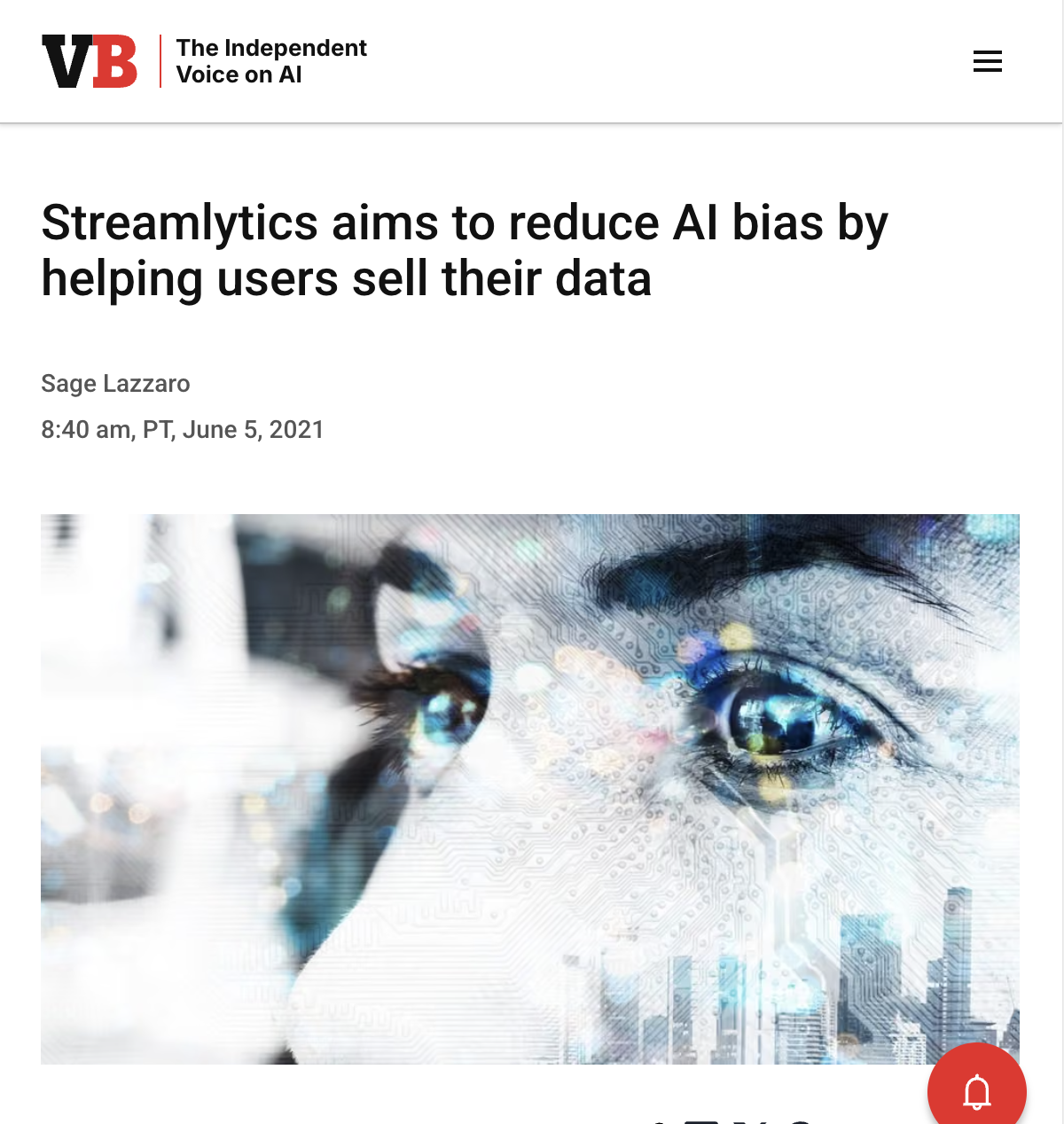
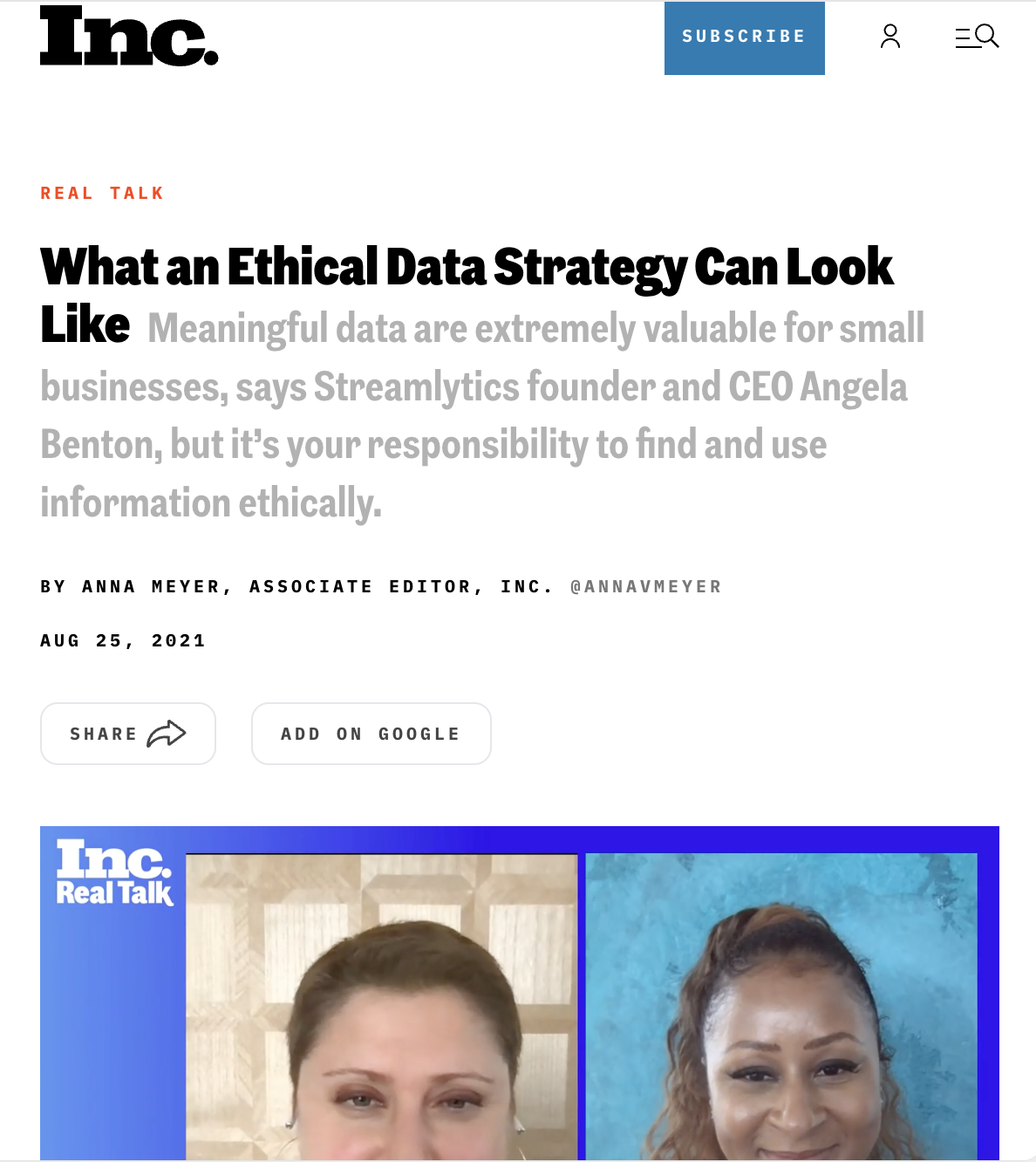
In 2021, VentureBeat examined our approach to reducing AI bias through consumer-owned data. That same year, Inc. explored what an ethical data strategy could look like. By 2023, as generative AI accelerated, Fortune featured Streamlytics in its reporting on the future of AI training data and the industry's reliance on scraping.
What had once seemed like a relatively niche conversation about data ownership was becoming central to the future of artificial intelligence.
From Data Ownership to Human Agency
Today, conversations about ethical AI and responsible AI often focus on fairness, transparency, accountability, and the risks associated with increasingly powerful systems.
These are important questions. AI governance, AI safety, and AI risk management all have essential roles to play in determining how intelligent systems are developed and deployed.
But I think there's another dimension that deserves more attention.
As AI systems become more autonomous, the question is no longer limited to what data they use or how they arrive at an answer.
It's also about what happens to human judgment, expertise, and agency when machines begin making decisions or carrying out actions on our behalf.
Who determines when human judgment is necessary? Who has the authority to provide it? How is that authority represented in a technical system? And how do we ensure that human expertise doesn't become another resource extracted without appropriate permission, attribution, or value?
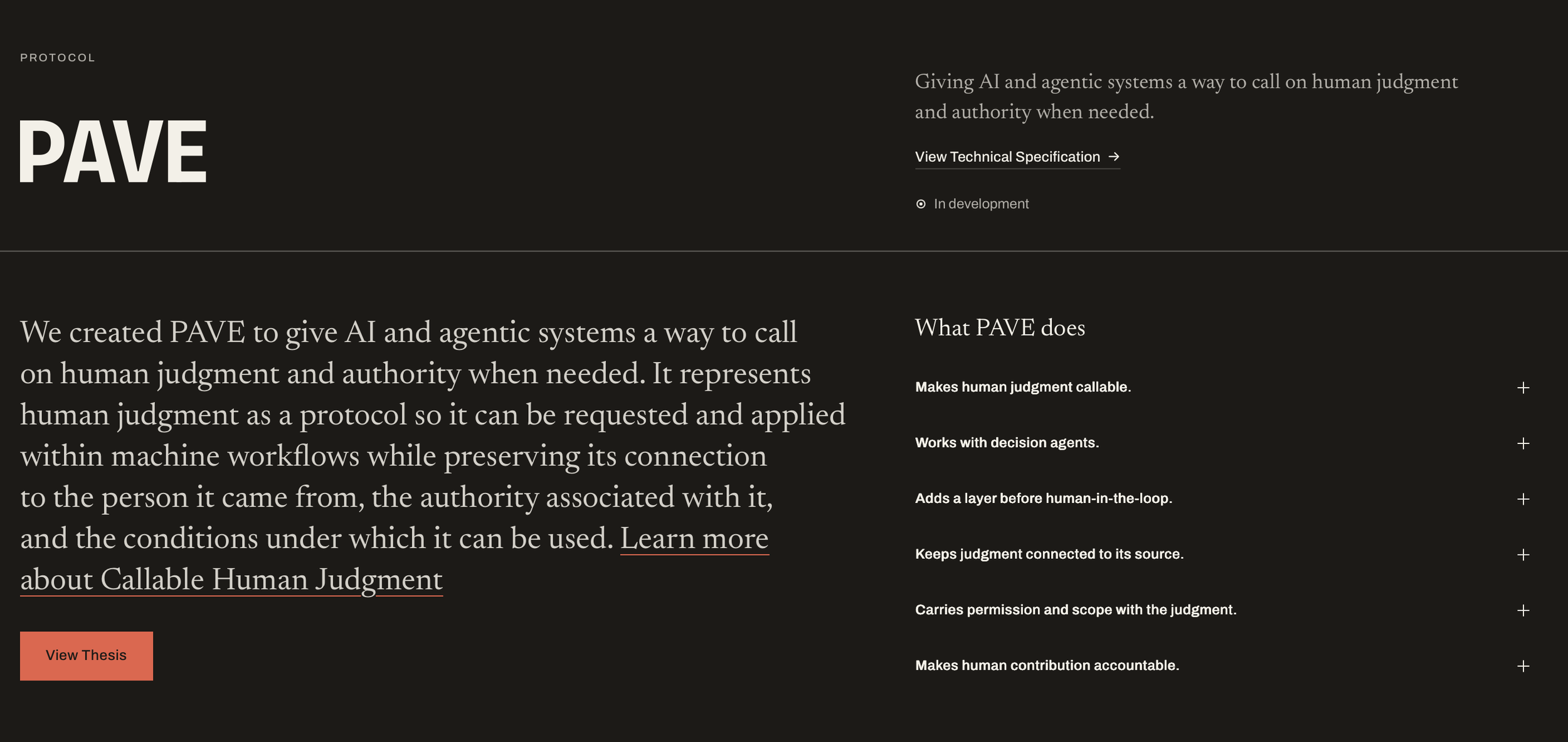
These are some of the questions I'm exploring through my current work at FRUIT, including the development of PAVE, a protocol designed around making human judgment callable within AI systems.
The work builds on many of the ideas I explored through Streamlytics, but approaches them at a different layer of the technology stack.
Where Streamlytics focused on ownership and participation in the data economy, this work examines how human authority and judgment can be preserved as AI systems become more capable of acting independently.
What Human-Centered AI Means to Me
I think human-centered AI has to mean more than designing technology that's easy for people to use.
It should also mean thinking carefully about the position humans occupy within the systems we're creating.
A human-in-the-loop approach can provide important oversight, but simply inserting a person into a workflow doesn't resolve questions of authority, accountability, or ownership.
I am interested in what happens when these considerations become part of the infrastructure itself, rather than something added after a system has already been designed.
This is where human agency becomes especially important.
As we move toward systems that can reason, make recommendations, and perform increasingly complex tasks, we need to be more deliberate about the boundaries between machine capability and human authority.
I don't think the goal should be to limit what technology can do. I think we need to become much more intentional about what we want it to do, for whom, and on whose terms.
Building, Creating, and Making Sense of What's Next
My work has never existed exclusively in one medium.
I've built companies, developed technology, written essays, participated in public conversations, and created work across different formats.
At this stage in my career, I'm interested in bringing these practices together and with media’s current role in public understanding, I think it’s incredibly important to be able to tell the full story of the technologies we develop and who they impact.
Some ideas are best explored through technical systems. Others need a film, a conversation, an essay, or an experience that makes an otherwise abstract issue tangible.
For me, these are different ways of examining the same questions.
Technology doesn't develop separately from society. It changes how we work, create, participate, and understand our place in the world.
And I think the people building these systems have a responsibility to engage with those implications, not just their technical capabilities.
That belief has shaped my work for nearly two decades, from expanding participation in the technology economy through NewME, to exploring ethical data ownership through Streamlytics, to the questions of human agency and intelligent systems I'm working on today.
I don't believe ethical AI can be achieved through principles alone. It also has to be reflected in what we build, how those systems operate, and the relationships they create between people and technology.
That's the work I'm interested in continuing.
Selected Work & Coverage
Essays
Selected Works